The Digital Rupee Moment: Will India Reinvent Money or Redefine Financial Freedom?
The next financial revolution may not be visible
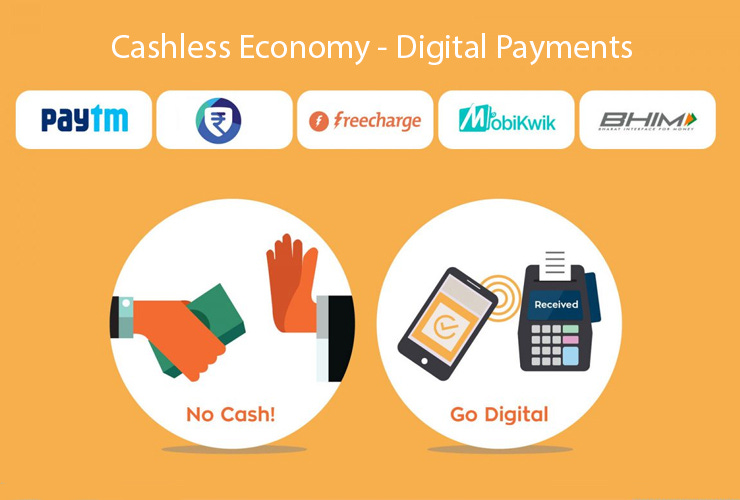
For most Indians, money has already changed. A decade ago, cash dominated daily transactions. Today, a street vendor, a small farmer, and a corporate executive all use digital payments seamlessly. What began as convenience has become habit.
But the transformation is far from complete.
The introduction of the Digital Rupee, India’s central bank digital currency, signals the beginning of a deeper shift. This is not simply another payment method. It is a redesign of the monetary system itself.
The real question is not whether the Digital Rupee will coexist with existing forms of money. It is whether it will redefine how value, trust, and financial power operate in the digital age.
From private platforms to sovereign money
The rapid growth of digital payments globally has been driven largely by private platforms and financial intermediaries. While these systems improve efficiency, they also create dependence on networks outside direct sovereign control.
Central banks around the world are therefore exploring digital currencies. The goal is to ensure that as economies digitise, the state retains its ability to manage monetary policy, financial stability, and systemic risk.
India’s approach reflects this global shift. The Digital Rupee allows the central bank to issue currency directly in digital form while preserving trust in sovereign money.
In an increasingly digital economy, this could become essential.
Why the stakes are high
Money is not just an economic instrument. It is a symbol of sovereignty.
Control over currency enables governments to manage inflation, stabilise crises, and influence growth. If private digital currencies or foreign payment systems dominate, policy autonomy could weaken.
The Digital Rupee ensures that the state remains central in the financial architecture.
This is particularly relevant in a world of geopolitical competition and technological disruption.
Efficiency and inclusion
One of the strongest arguments for central bank digital currencies is efficiency. Transactions can become faster, cheaper, and more secure. Settlement can be instantaneous. Intermediaries can be reduced.
This has implications for financial inclusion. Even individuals without traditional bank accounts could participate in the digital economy.
Cross-border payments, often slow and expensive, could become more efficient. Remittances—a lifeline for millions—could improve significantly.
For India, with its large diaspora and growing global role, this is strategically important.
The future of banking and finance
However, the Digital Rupee could reshape the financial sector. If individuals and businesses hold money directly with the central bank, traditional banks may face new challenges.
Deposits could shift. Lending models may evolve. Financial intermediation could change.
This transformation will not be sudden, but it will be gradual and structural.
Banks may move toward value-added services, risk management, and advisory roles.
The privacy dilemma
Perhaps the most debated issue is privacy.
Digital currencies create new possibilities for monitoring transactions. While this can improve compliance and reduce illicit activity, it also raises concerns about surveillance and individual freedom.
Balancing efficiency with privacy will be critical. Trust in the system will depend on safeguards, transparency, and institutional credibility.
This is not only a technological challenge but a democratic one.
The global monetary contest
The Digital Rupee is also part of a broader global race. Countries are experimenting with digital currencies to shape future financial systems.
If interoperable networks emerge, the architecture of international finance could change. New payment corridors, alternative reserve systems, and digital trade could reduce dependence on traditional frameworks.
India’s participation ensures that it remains influential in this emerging order.
Economic transformation and innovation
Beyond payments, digital currency infrastructure can enable innovation. Smart contracts, programmable payments, and automated compliance could reshape sectors such as insurance, supply chains, and trade.
This could accelerate efficiency across industries.
The Digital Rupee could also support the formalisation of the economy, improving transparency and credit access.
The link to skills and financial literacy
As financial systems become more complex, citizens must understand them. Digital literacy, data awareness, and financial capability will become essential.
Human capital will determine whether technological systems empower or exclude.
Risks and structural challenges
Adoption will depend on usability, trust, and incentives. If the Digital Rupee does not offer clear advantages, users may prefer existing platforms.
Cybersecurity, infrastructure resilience, and regulatory clarity will be critical.
The system must remain stable even during crises.
A new era of monetary power
The Digital Rupee represents a deeper shift in how economies function. Money is becoming programmable, data-driven, and integrated into digital ecosystems.
This transformation will influence taxation, welfare delivery, credit, and economic policy.
The countries that design these systems will shape the rules of the future economy.
The long-term vision
India’s digital transformation has already reshaped payments and identity. The next phase could redefine finance itself.
If implemented thoughtfully, the Digital Rupee could combine efficiency, inclusion, and sovereignty.
If mismanaged, it could create distrust and resistance.
The stakes are therefore not just economic, but social and political.
The future of money is not only about technology. It is about trust.
Manish Kumar is an independent education and career writer who focuses on simplifying complex academic, policy, and career-related topics for Indian students.
Through Explain It Clearly, he explores career decision-making, education reform, entrance exams, and emerging opportunities beyond conventional paths—helping students and parents make informed, pressure-free decisions grounded in long-term thinking.
Comments
Post a Comment